

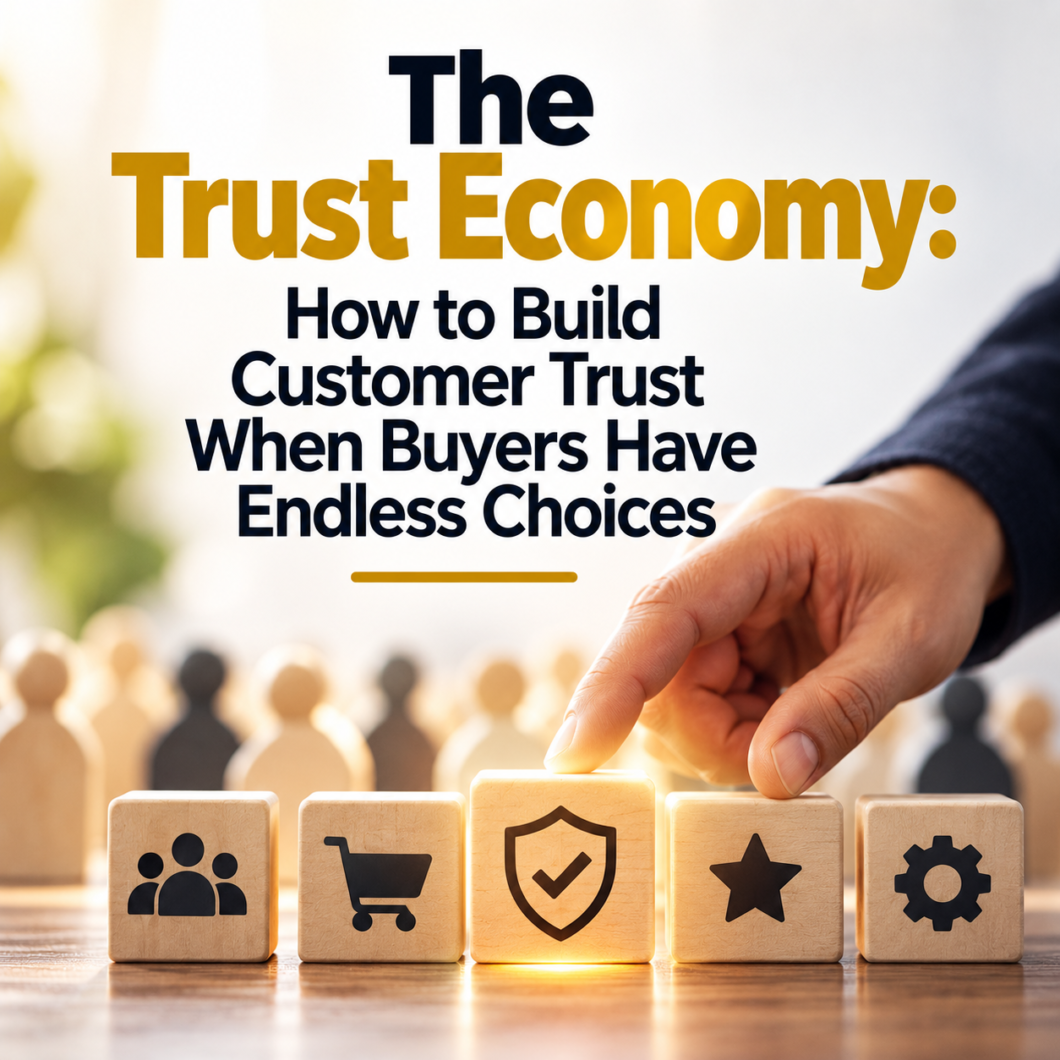
Every business era has had one thing that mattered most.
Factories built the industrial age. Knowledge built the information age. Attention built the digital age.
Today, the thing that matters most is harder to buy than any of these: customer trust.
More Options, Less Confidence
A customer today can compare ten businesses, read hundreds of reviews, ask friends on WhatsApp, search Reddit, and even ask AI for a second opinion — all in a few minutes.
Information is easy to find. Confidence is not.
The real question in a customer’s mind isn’t “what are you selling?” It’s “can I trust you?“
Why Customers Trust Businesses Less Today
There was a time when a well-known brand name or a polished advertisement was enough to win a customer’s confidence. Fake reviews, exaggerated claims, and paid promotions changed that. Customers now check everything before they believe it.
This means trust is no longer given by default. It has to be earned at every step — and earned again the next time.
When something becomes harder to find, it becomes more valuable. That is exactly what has happened to trust.
Customers Buy Confidence, Not Just Products
Before someone pays, they are silently asking themselves: Will this actually work? Will I regret this? What if something goes wrong?
A trusted business often wins over a cheaper one — not because its product is better, but because it feels safer to choose. Customers frequently pay more for certainty, not for extra features.
How Customer Trust Affects Your Profits
Trust may feel like a “soft” quality, but its impact is very real in numbers. A business with strong customer trust typically sees:
- Lower cost of acquiring new customers
- Higher conversion from enquiry to sale
- Longer customer retention
- More referrals
- Shorter sales cycles
- Greater ability to charge fair prices without losing customers
You won’t find “trust” as a line in your accounts — but it quietly shapes almost every number in them.
Why Trust Is Hard for Competitors to Copy
A competitor can copy your website, your pricing, even your ad campaign within a week. What they cannot copy is years of kept promises or hundreds of honest customer recommendations.
Trust takes time to build, and unlike most business assets, it grows stronger the longer it exists — provided you keep earning it.
How Every Customer Interaction Builds or Breaks Trust
Trust isn’t created by writing “we value integrity” on your website. It’s created through what customers actually experience: how quickly you respond, whether you follow up, how you handle a complaint, and whether your delivery matches your promise.
Every gap between what you promise and what you deliver quietly damages trust. Close that gap consistently, and trust builds instead.
Why Founders Play a Role in Building Customer Trust
Customers don’t just want a good product. They want to know who is behind the business. What do you believe in? Do you understand their problem? Will you take responsibility if something goes wrong?
This is why founders sharing their knowledge, their reasoning, and even their mistakes has become a genuine business advantage — not just personal branding. People find it easier to trust what they understand.
Trust Makes Everything Else Work Better
Once customers trust a business, everything gets easier. Advertising converts better. Sales conversations move faster. Referrals increase. Other businesses become more willing to partner with you.
Attention gets a business noticed. Trust is what turns that attention into paying, returning customers.
Referrals Are Trust Passed On
A referral is more than just a new lead — it’s a customer lending you their own credibility. When someone tells a friend, “you should talk to them, they really helped us,” the entire first stage of building trust is already done.
This is how trust keeps growing: a good experience creates trust, trust brings repeat business and referrals, and each referral brings a new customer who already half-trusts you before you’ve even spoken.
5 Ways to Build Customer Trust
- Keep small promises. Call when you said you would. Deliver on the date you gave. Small, kept promises build big confidence.
- Show proof, don’t just claim it. Case studies, real results, and honest testimonials work harder than any adjective.
- Give value before asking for the sale. Teach something useful. Answer a question for free. This earns the credibility that makes selling easier.
- Make the buying process clear. Confusion creates hesitation. A customer who understands exactly what happens next feels safer choosing you.
- Own your mistakes. “We got this wrong, and here’s how we’re fixing it” builds more trust than pretending nothing ever goes wrong.
Attention Gets You Noticed. Trust Gets You Chosen.
You can buy clicks, impressions, and influencer shout-outs. You cannot buy real trust — it is earned one honest interaction at a time.
The businesses that win in the years ahead won’t necessarily be the loudest ones. They will be the ones customers feel safest choosing.
So instead of only asking “how do we get more customers?” — ask a better question:
“Why should a customer trust us over every other option they have?”
Answer that honestly, and you’ll have found your business’s real competitive advantage.